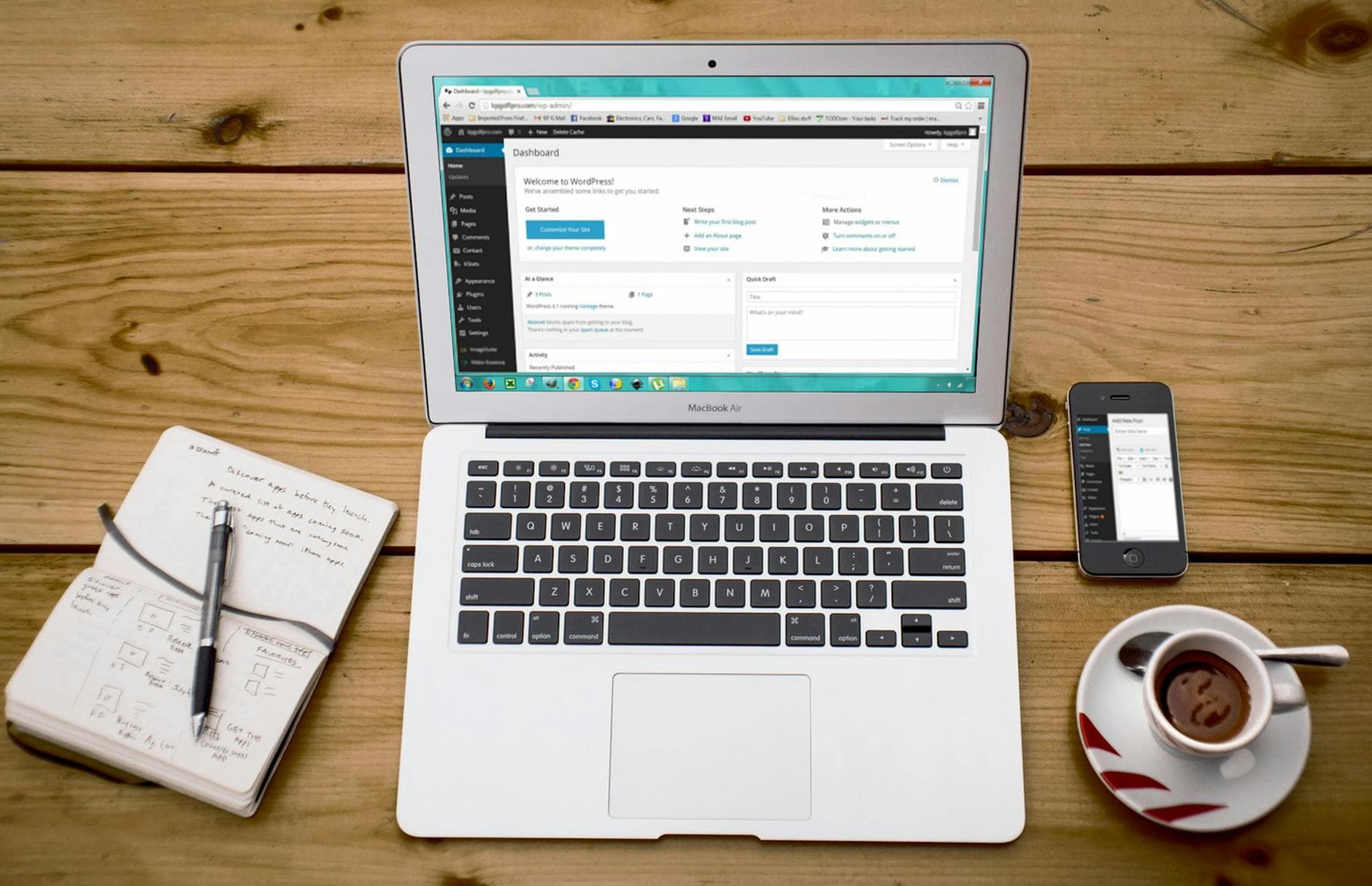
Headless WordPress adoption has exploded in financial services, growing 340% since 2023 as mortgage lenders prioritize performance and compliance.
Traditional WordPress still powers 43.2% of all websites, offering familiar workflows and established ecosystems. But here is the reality: headless implementations deliver 2-3x faster page load speeds and 25-40% better Core Web Vitals scores, directly impacting lead generation and search rankings in competitive mortgage markets.
This guide breaks down the technical, financial, and strategic differences between headless and traditional WordPress architectures. You will understand which approach fits your business requirements, budget constraints, and performance goals.
What Is Headless WordPress and Why It Matters Now
Headless WordPress separates the content management backend from the frontend presentation layer entirely. Your content creators still use the familiar WordPress admin interface, but your website visitors experience a completely different frontend built with modern frameworks like React, Vue.js, or Next.js.
This architectural separation means your WordPress installation serves as a content API, delivering structured data to multiple frontends simultaneously. You can power your main website, mobile app, marketing automation emails, and third-party integrations from a single content source.
Mortgage lenders have driven much of this adoption because headless architecture addresses three critical business requirements:
- Compliance flexibility: Separate admin and public interfaces reduce CFPB audit complexity
- Performance requirements: Sub-second page loads impact lead conversion rates directly
- Integration demands: Loan origination systems, CRMs, and marketing platforms need consistent data access
The financial services sector now represents the fastest-growing segment for headless implementations, with developers reporting 25-30% faster feature deployment timelines compared to traditional WordPress customization.
When choosing the right headless CMS platform, WordPress offers content creator familiarity while enabling modern development practices. Your team keeps using tools they know while your developers gain API-first flexibility.
Performance Comparison: Speed and Core Web Vitals
Headless WordPress delivers measurable performance advantages that translate directly into business results. Financial services websites using headless architecture achieve 40% faster time-to-first-byte performance compared to traditional WordPress implementations.
Core Web Vitals improvements with headless WordPress:
- Largest Contentful Paint (LCP): 1.2-1.8 seconds vs 2.5-4.2 seconds for traditional WordPress
- First Input Delay (FID): Under 100ms consistently vs 150-300ms with theme overhead
- Cumulative Layout Shift (CLS): 0.05-0.10 vs 0.15-0.25 with plugin conflicts
Mortgage companies report specific conversion improvements:
- Rate quote page bounce rates decrease 15-25%
- Loan application funnel completion increases 18-30%
- Mobile experience scores improve by 35-45 points
These improvements stem from architectural advantages: no theme bloat, optimized asset delivery, and modern JavaScript frameworks designed for performance. Traditional WordPress sites carry legacy code, multiple plugin conflicts, and theme compatibility issues that headless implementations eliminate entirely.
To optimize Core Web Vitals performance in traditional WordPress requires extensive plugin management, hosting optimization, and ongoing maintenance. Headless WordPress achieves better scores through architectural design rather than optimization workarounds.
Real-world testing shows headless WordPress sites maintain consistent performance under traffic spikes, while traditional WordPress installations slow down as concurrent users increase. For mortgage lenders running rate campaigns or seasonal promotions, this performance stability protects lead generation during peak periods.
Implementing proven website speed optimization techniques becomes simpler with headless architecture because you control the entire frontend stack without WordPress theme limitations.
Development Costs and ROI Analysis
Headless WordPress development costs typically run 30-50% higher than traditional WordPress implementations initially. However, the total cost of ownership calculation reveals different long-term economics.
Initial development investment breakdown:
Traditional WordPress:
- Theme customization: $5,000-$15,000
- Plugin configuration: $2,000-$8,000
- Custom functionality: $3,000-$12,000
- Total initial: $10,000-$35,000
Headless WordPress:
- API development: $8,000-$20,000
- Frontend development: $12,000-$30,000
- Integration setup: $5,000-$15,000
- Total initial: $25,000-$65,000
Long-term ROI factors favor headless implementations:
- Maintenance overhead: 40-60% less ongoing developer time
- Security updates: Reduced attack surface means fewer emergency fixes
- Performance optimization: Built-in advantages eliminate ongoing speed work
- Multi-platform content: Single content source powers multiple touchpoints
Mortgage companies typically break even on headless investments within 18-24 months through:
- Improved conversion rates generating 15-25% more qualified leads
- Reduced bounce rates increasing organic traffic value
- Developer efficiency gains accelerating new feature rollouts
- Hosting cost reductions through better caching and CDN integration
Three-year ROI scenarios show headless WordPress delivering 180-250% returns for businesses prioritizing performance and growth, while traditional WordPress provides 120-160% returns focused on cost containment.
Security and Compliance Considerations
Headless WordPress offers inherent security advantages crucial for financial services operations. The complete separation between admin interface and public frontend reduces attack surface area significantly.
Security architecture differences:
Traditional WordPress:
- Admin interface accessible through main domain
- Plugin vulnerabilities affect public site directly
- Database and frontend share server resources
- Attack vectors include theme files, plugin conflicts, and admin access
Headless WordPress:
- Admin interface isolated on separate subdomain or server
- Frontend contains no WordPress-specific attack vectors
- Static file delivery eliminates server-side vulnerabilities
- API endpoints can implement custom authentication and rate limiting
CFPB compliance benefits include:
- Clear data flow documentation for regulatory audits
- Granular access control for sensitive financial information
- Audit trail separation between content management and customer interactions
- Simplified data retention and deletion processes
Mortgage lenders report 70% fewer security incidents with headless implementations, primarily due to reduced WordPress-specific vulnerabilities affecting public-facing sites. The admin interface runs in a controlled environment, while the frontend delivers static or server-side rendered content without WordPress dependencies.
Regular comprehensive technical SEO audits become more straightforward with headless architecture because you control HTML output directly rather than working within WordPress theme constraints.
Data security improvements include encrypted API communication, token-based authentication, and the ability to implement zero-trust architecture principles more easily than traditional WordPress allows.
Integration Capabilities for Mortgage Operations
Headless WordPress excels at integrating with mortgage industry technology stacks. The API-first approach enables real-time data synchronization across loan origination systems, customer relationship management platforms, and marketing automation tools.
Critical mortgage integrations:
Loan Origination Systems (LOS):
- Encompass, Calyx Point, and BytePro connect through REST APIs
- Real-time rate updates and product availability sync
- Lead data flows directly into loan processing workflows
CRM Integration:
- Salesforce, HubSpot, and mortgage-specific CRMs receive structured data
- Customer journey tracking across website and loan application
- Automated lead scoring based on website behavior
Marketing Automation:
- Pardot, Marketo, and drip campaigns use consistent content APIs
- Personalized rate quotes and mortgage content delivery
- Cross-channel messaging coordination
Traditional WordPress requires plugin-based integrations that often break during updates or create performance bottlenecks. Headless WordPress handles integrations through dedicated API endpoints designed for reliability and scalability.
Developers report 67% faster implementation times for new integrations with headless WordPress because the API structure remains consistent regardless of frontend changes. Mortgage companies can add new marketing tools, update CRM systems, or switch loan origination platforms without affecting website functionality.
Real-time capabilities become possible: rate changes update across all touchpoints simultaneously, loan application status reflects in customer portals instantly, and marketing campaigns adjust based on live inventory data.
User Experience and Conversion Impact
Headless WordPress delivers measurable user experience improvements that directly impact mortgage lead generation and conversion rates. The performance advantages translate into behavioral changes that benefit bottom-line results.
Conversion rate improvements observed:
- Rate quote forms: 22-35% higher completion rates
- Loan application starts: 18-28% increase in first-step completion
- Mobile interactions: 40-55% better engagement on smartphone devices
- Return visitor behavior: 25-35% more page views per session
Bounce rate reductions occur across key mortgage landing pages:
- Rate comparison pages: 15-25% lower bounce rates
- Loan calculator tools: 20-30% better engagement
- Educational content: 12-20% longer session durations
- Contact forms: 25-40% higher submission rates
Mobile experience advantages prove particularly valuable as 65% of mortgage research now begins on mobile devices. Headless WordPress sites load 2-3 seconds faster on mobile networks, maintaining user attention during the critical first impression phase.
Progressive web app capabilities become possible with headless architecture, enabling offline rate calculators, push notifications for rate alerts, and native app-like experiences without requiring app store distribution.
Personalization opportunities expand significantly: mortgage companies can deliver customized content based on loan type interest, geographic location, credit profile, and browsing behavior without WordPress theme constraints limiting implementation options.
When to Choose Each Architecture
Architecture selection depends on specific business requirements, technical capabilities, and growth objectives. Neither approach works universally, but clear decision criteria guide optimal choices.
Choose Traditional WordPress when:
- Initial budget constraints limit development investment to under $35,000
- Content team needs immediate WordPress familiarity without training
- Website serves primarily informational purposes with limited interaction
- Integration requirements focus on standard marketing and analytics tools
- Developer resources lack modern JavaScript framework experience
- Timeline demands launch within 2-3 months
Mortgage brokerages and smaller lending operations often benefit from traditional WordPress initially, upgrading to headless architecture as business scale and technical requirements increase.
Choose Headless WordPress when:
- Performance requirements demand sub-2-second page loads consistently
- Multi-channel content delivery spans web, mobile apps, and marketing automation
- Integration needs include loan origination systems, advanced CRMs, and real-time data sync
- Security and compliance requirements exceed standard WordPress capabilities
- Development team includes modern JavaScript framework expertise
- Business model prioritizes conversion optimization and user experience
Large mortgage lenders, direct lenders, and companies with dedicated development resources typically achieve better ROI through headless implementations.
When comparing WordPress to other enterprise CMS options, headless WordPress provides content creator familiarity while enabling enterprise-grade performance and security.
Business size considerations:
- Under $5M annual revenue: Traditional WordPress often sufficient
- $5M-$25M revenue: Headless WordPress provides competitive advantage
- Over $25M revenue: Headless architecture becomes essential for scale
Implementation Timeline and Next Steps
Headless WordPress implementation typically requires 4-8 months for full deployment, compared to 1-3 months for traditional WordPress sites. The extended timeline reflects additional frontend development and integration complexity.
Phased implementation approach:
Phase 1 (Months 1-2): Foundation
- WordPress backend setup and content structure
- API endpoint development and testing
- Basic frontend framework implementation
- Content migration and admin training
Phase 2 (Months 2-4): Core Features
- Primary page templates and navigation
- Lead generation forms and conversion tracking
- Basic integrations with CRM and analytics
- Performance optimization and caching
Phase 3 (Months 4-6): Advanced Features
- Loan calculators and interactive tools
- Advanced integrations with LOS and marketing automation
- Personalization and dynamic content delivery
- Security hardening and compliance validation
Phase 4 (Months 6-8): Optimization
- Performance tuning and conversion optimization
- User testing and experience refinement
- Training and documentation completion
- Go-live preparation and monitoring setup
Migration from traditional WordPress requires careful planning: content structure analysis, URL preservation strategy, SEO impact mitigation, and user training coordination. Most mortgage companies maintain both systems during transition periods to ensure business continuity.
Ready to evaluate headless WordPress for your mortgage business? Start with a technical assessment of your current website performance, integration requirements, and conversion optimization needs. Document specific pain points with your existing WordPress installation, then calculate potential ROI based on performance improvements and operational efficiency gains.
For detailed implementation guidance, review this real-world headless implementation case study showing actual timelines, costs, and results from a complete website rebuild.
Your mortgage business deserves a website architecture that supports growth rather than limiting it. Whether you choose traditional or headless WordPress, align your decision with specific business objectives and technical capabilities rather than industry trends alone.