The Modern Legal Client Has Changed. Has Your Firm?
For generations, law firms grew on a steady diet of referrals and reputation. A firm handshake and a good name were the most powerful marketing tools an attorney could have. But let's be honest, that world is fading. Fast. Today, your next client isn't asking a neighbor for a recommendation; they're pulling out their phone and typing "divorce lawyers near me" into Google. And they're making a judgment about your firm in seconds based on what they find.
If your online presence doesn't inspire confidence, you're not just missing out on a few leads. You're becoming invisible to a huge pool of younger, higher-value clients. The stakes are high. Firms that don't adapt are already losing ground. The good news? A strategic digital presence offers a clear, actionable path to winning the clients you want. Let's break down how.
Your Website: Is It a Brochure or a Growth Engine?
Think about your firm's website right now. Is it just a static online brochure, a digital version of the pamphlet you keep in the lobby? Or is it an active, hardworking engine for client acquisition? Most law firm websites fall into the first category. They're a passive placeholder, not a strategic tool.
In 2026, your website needs to be your most effective rainmaker. It has to do three things exceptionally well: build trust, establish authority, and create clear pathways for potential clients to take the next step. This isn't about flashy design; it's about strategic substance.
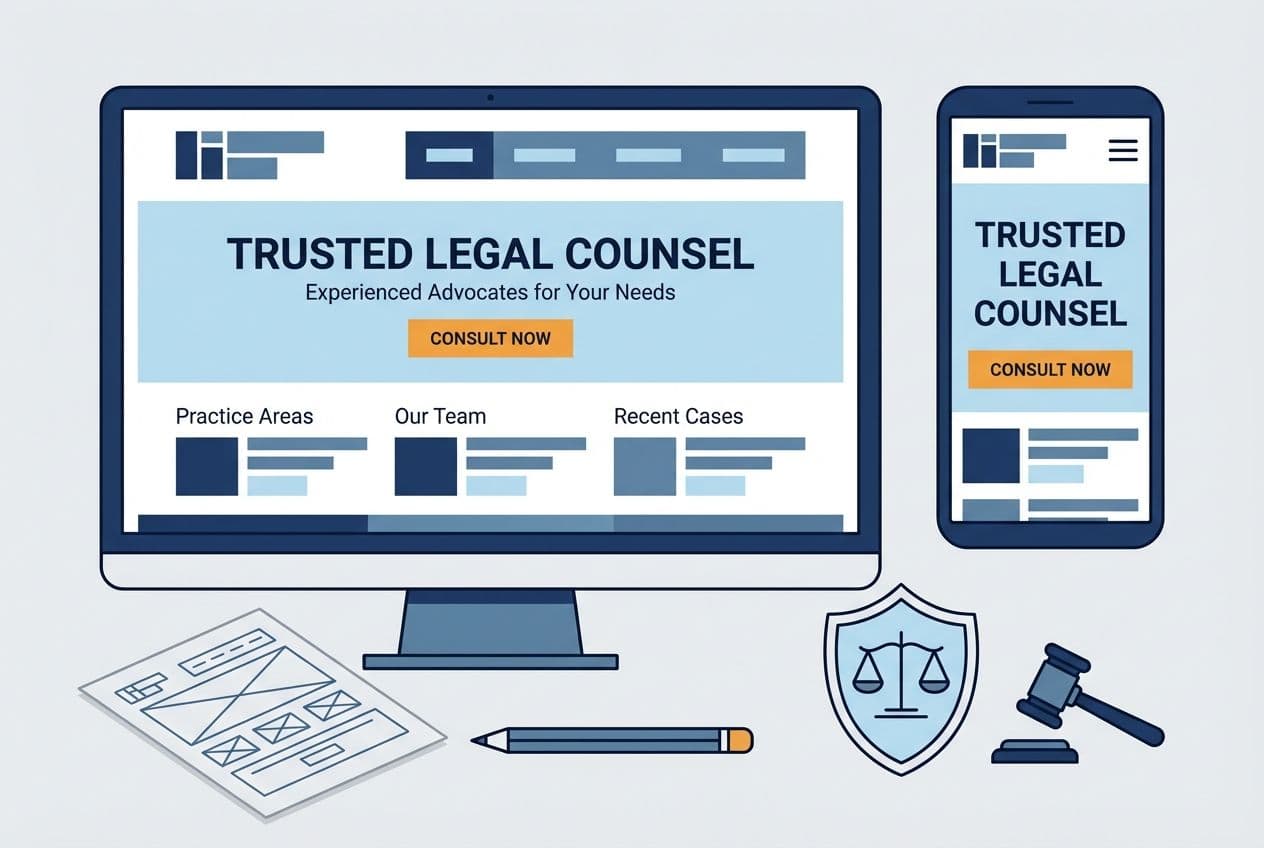
This means having professional, high-quality Websites for Attorneys that convey credibility from the first click. It means creating detailed practice area pages that answer a potential client's most pressing questions before they even think to ask them. It means having attorney bios that build a real, human connection. And, crucially, it means having clear conversion pathways, like "Request a Consultation" buttons, that guide a visitor toward becoming a client. Your website should be the firm foundation of your entire digital strategy.
Local SEO: Your Most Powerful Client Magnet
Here's a number that should get your attention: the phrase "lawyers near me" is searched on Google about 125,810 times every single month. "Divorce lawyers near me" gets another 80,630 searches. This is where your clients are looking. And if you're not on the first page of those results, you might as well not exist.
For most law firms, Local SEO is the highest-ROI attorney marketing strategy, period. It's about making sure you show up when potential clients in your geographic area are actively searching for the services you provide. This isn't just about stuffing keywords onto a page. It's a multi-faceted strategy.
It starts with optimizing your Google Business Profile, the information box that shows up in map results. It involves creating location-specific content on your website, like a page about "Family Law in Columbus, Ohio." And it absolutely requires a strategic approach to getting positive client reviews, which are a massive trust signal for both clients and Google. Long-tail keywords, like answering specific legal questions in your blog, can also attract highly qualified clients. For a complete breakdown, see our Local SEO for Attorneys guide. This is a core part of any effective SEO plan.
AI and the Changing Search Landscape in 2026
One development that every attorney needs to understand: AI Overviews now appear on roughly 31% of Google searches. These AI-generated summaries show up at the top of search results, often answering questions before users click through to any website. For law firms, this means your content strategy needs to evolve.
To get cited in AI Overviews, your content must be structured clearly with headings, bullet points, and direct answers to common legal questions. FAQ sections, step-by-step guides, and authoritative explanations of legal processes all help. The firms winning in 2026 are those creating genuinely helpful content that AI systems recognize as trustworthy and comprehensive.
This shift also makes Answer Engine Optimization (AEO) increasingly important. You're not just optimizing for Google anymore; you're optimizing for ChatGPT, Perplexity, and other AI tools that potential clients use to research legal options.
Ethical Marketing: Building Trust Within the Rules
Now, let's talk about the elephant in the room: ethical compliance. State bar advertising rules create unique constraints for law firms that other businesses just don't have to worry about. It's easy to see these rules as a barrier, a frustrating set of limitations. But that's the wrong way to look at it.
Think of compliance not as a barrier, but as a framework for building trust. The rules are there to prevent false or misleading statements, and following them demonstrates your firm's integrity. It's about marketing effectively while upholding the high standards of the legal profession.
This means you must handle testimonials and case results properly, often with disclaimers. It means avoiding any language that could be seen as a promise or guarantee of a specific outcome. It means being crystal clear about who you are and what you do. Partnering with experts who understand these nuances is critical. It's not about finding loopholes; it's about communicating your value clearly and ethically. A good content marketing strategy can be very effective here.
Conclusion: Your Next Client is Searching Right Now
The shift to digital isn't a trend; it's a fundamental transformation in how people find and hire attorneys. Relying on old methods is no longer a viable strategy for growth. Building a powerful digital presence is the new requirement for a thriving practice.
It starts with a website that works as hard as you do. It's powered by a smart local SEO strategy that puts you in front of the right clients at the right time. And it's all guided by an ethical framework that builds trust and credibility.
Your next client is out there, right now, searching for an attorney they can trust. The only question is, will they find you?
Frequently Asked Questions
What's the most important thing on a law firm website? Trust. Everything on your site, from the design to the content, should be focused on building trust and credibility. This includes professional attorney photos, clear case results or testimonials (with disclaimers), and easy-to-find contact information.
How much should a small law firm spend on digital marketing? There's no single answer, but a common approach is to allocate a percentage of your revenue. A good starting point for a small firm serious about growth is often between 7-10% of gross revenue. It's more important to be consistent than to spend a huge amount sporadically. If you're not sure, it might be time to ask, is my marketing working?
Can SEO really work for a small firm against big competitors? Absolutely. That's the beauty of Local SEO. A large national firm can't compete with your deep understanding of the local community. By focusing on location-specific keywords and building local authority, a small firm can absolutely dominate the search results in its specific geographic area.
What's the first step to improve my firm's online presence? Start with a thorough audit of your current website. Look at it from the perspective of a potential client. Is it easy to navigate? Does it clearly state what you do? Does it build trust? Often, a website refresh is the most impactful first step you can take.